Back
Back
Shop Bonsai
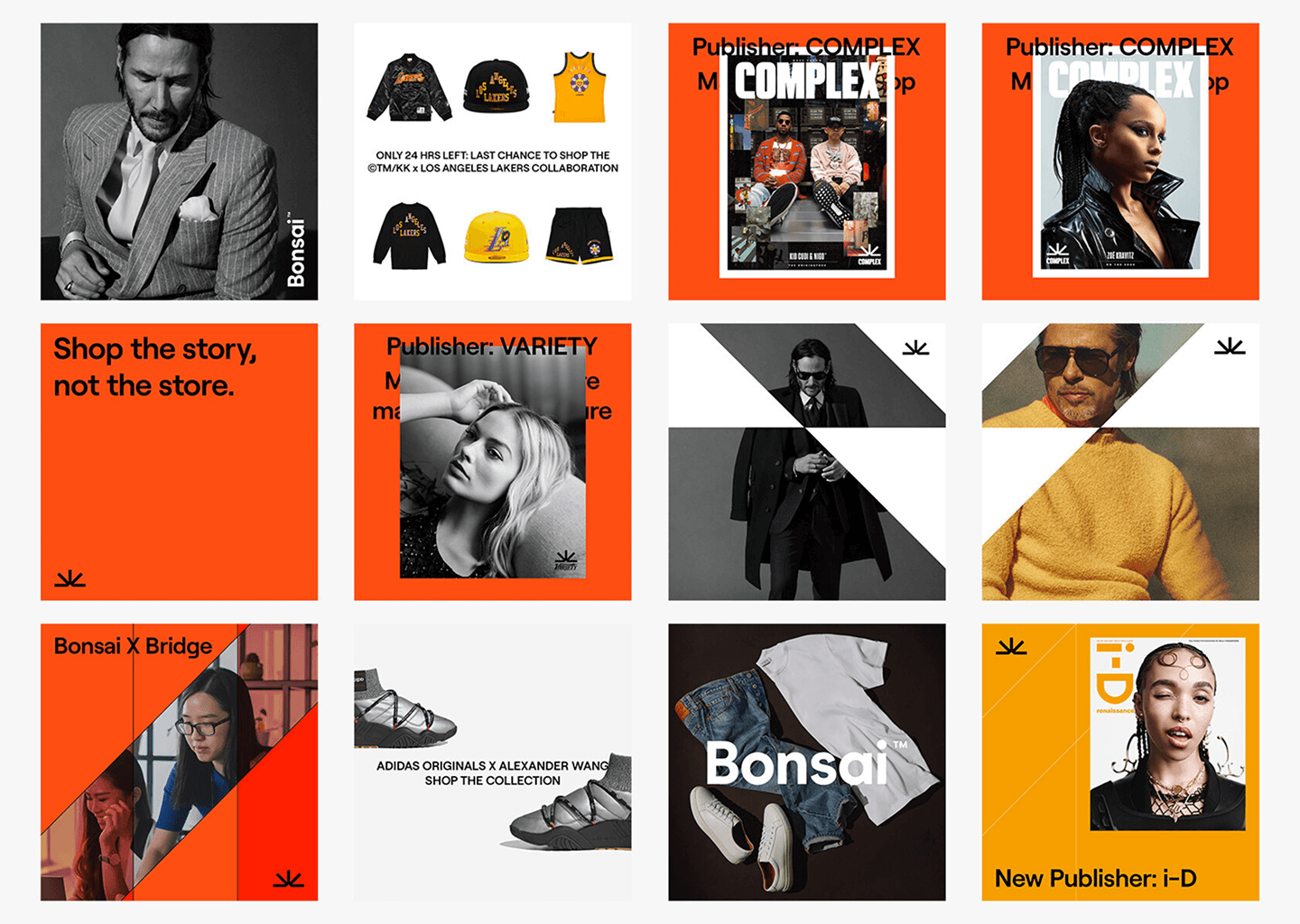
Bonsai was a Toronto-based commerce platform that connects editorial content with online shopping. Originally launched as a fashion discovery mobile app, it later evolved into a platform that enabled publishers to embed shoppable products directly within their articles.
Role
Product Designer
Industry
E-Commerce
PLATFORM
Web & Mobile
TIMELINE
2018—2022
Challenge
As Bonsai transitioned from a B2C mobile app to a B2B commerce platform, the product needed to support an entirely new workflow. Publishers and editorial teams required tools to quickly discover products, curate collections, and generate shoppable experiences inside articles, all without disrupting the reading experience.
The core design problem was scale and flexibility. The platform needed to enable writers to find and evaluate products quickly, support reusable commerce widgets within editorial content, and allow publishers to launch branded storefronts that felt native to their own visual identity. At the same time, the platform needed to respect each publisher's visual identity without disrupting the reading experience.
Process
I approached the project as an ecosystem design problem rather than a single interface.
The work began with research into how writers and editors actually source and integrate products into articles. Interviews with editorial teams revealed a fragmented, manual process where writers were independently searching for products, gathering images, and generating affiliate links before embedding them by hand. That research made it clear the real opportunity wasn't just building a better shopping experience for readers. It was eliminating the friction that prevented publishers from doing commerce at all.
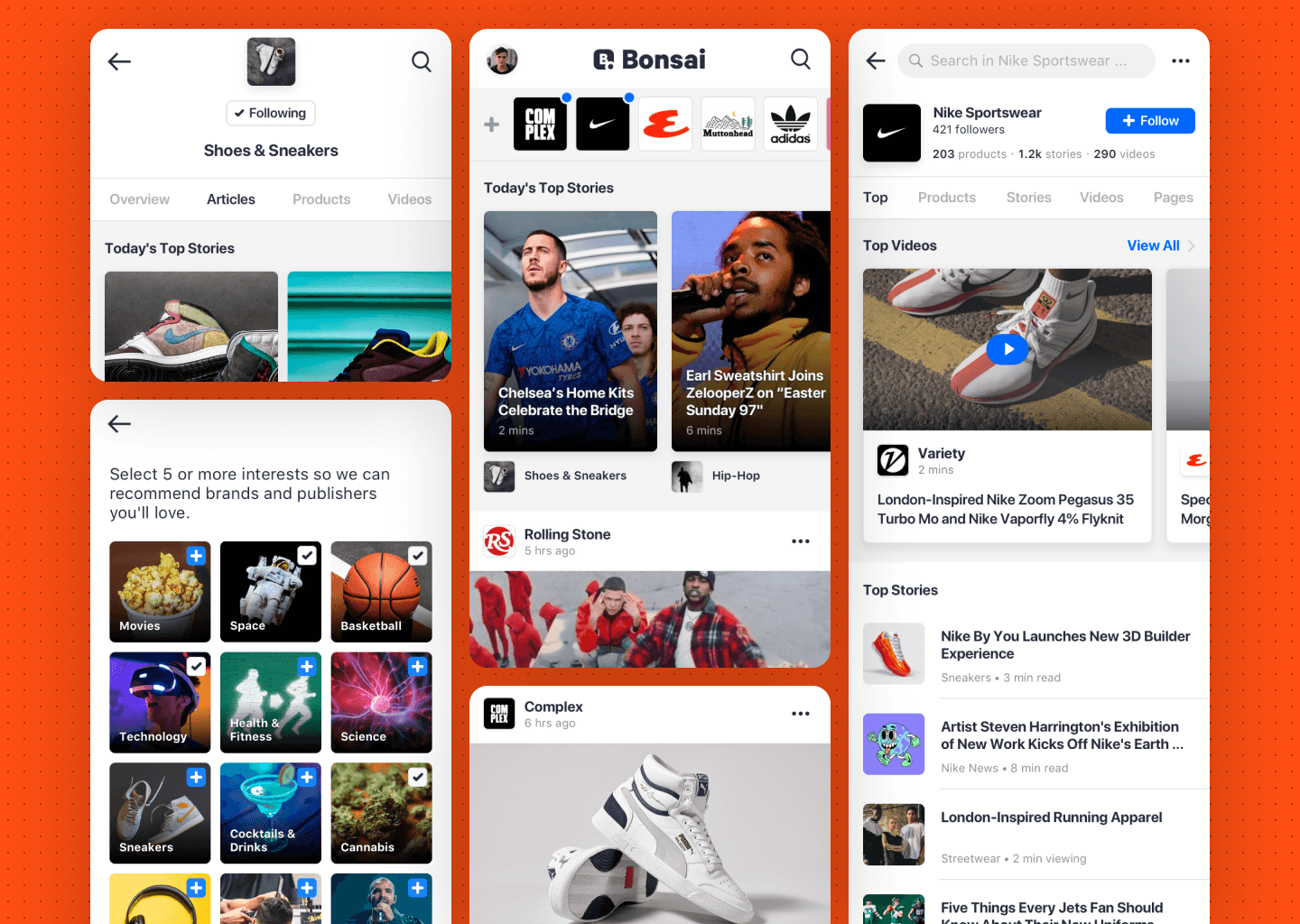
This insight shaped the design direction for each surface. For the iOS Discovery app, the key question was how to make product exploration feel editorial rather than transactional. I designed around following brands and publishers rather than browsing categories, letting the platform surface recommendations through interest and context rather than search intent.
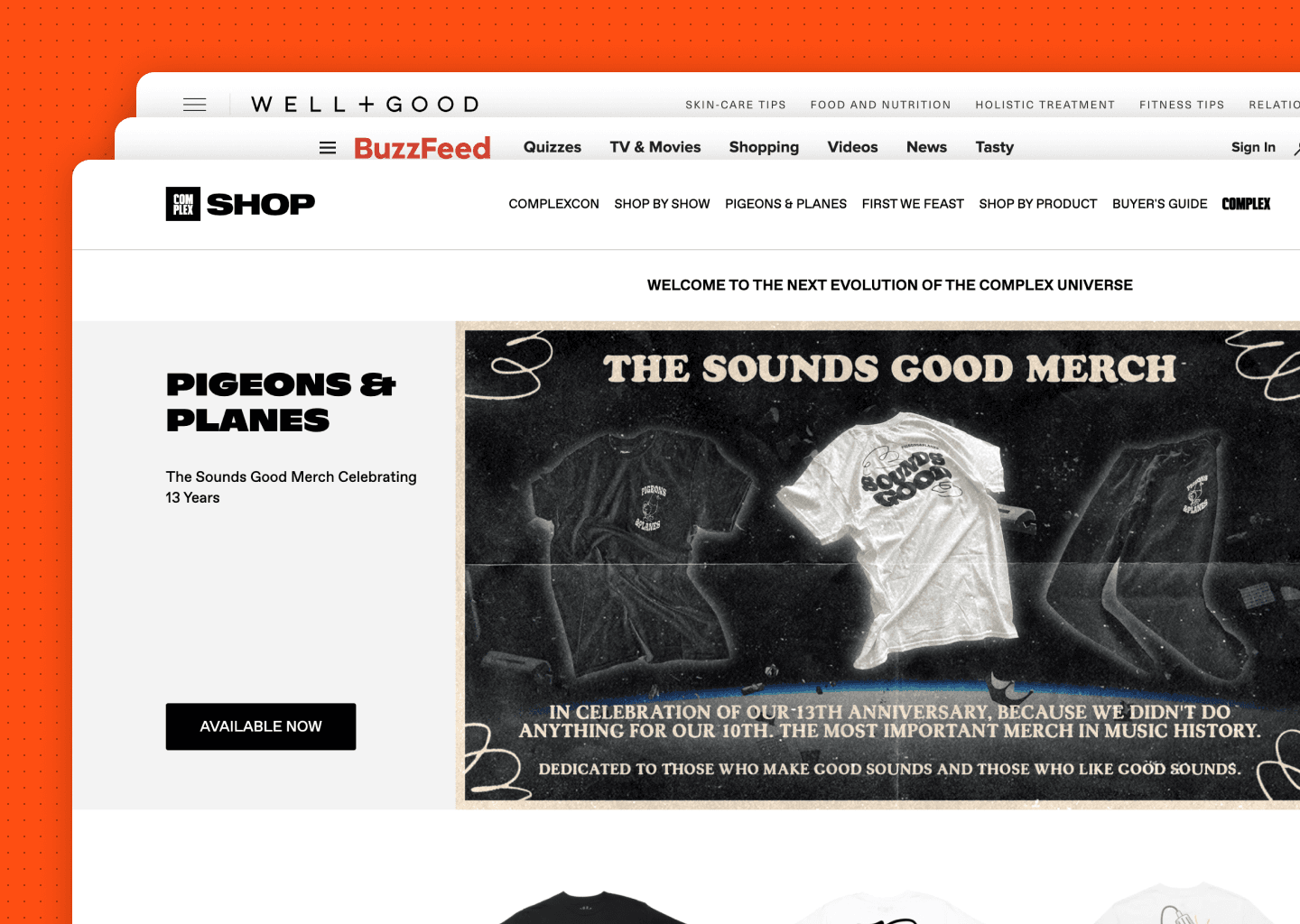
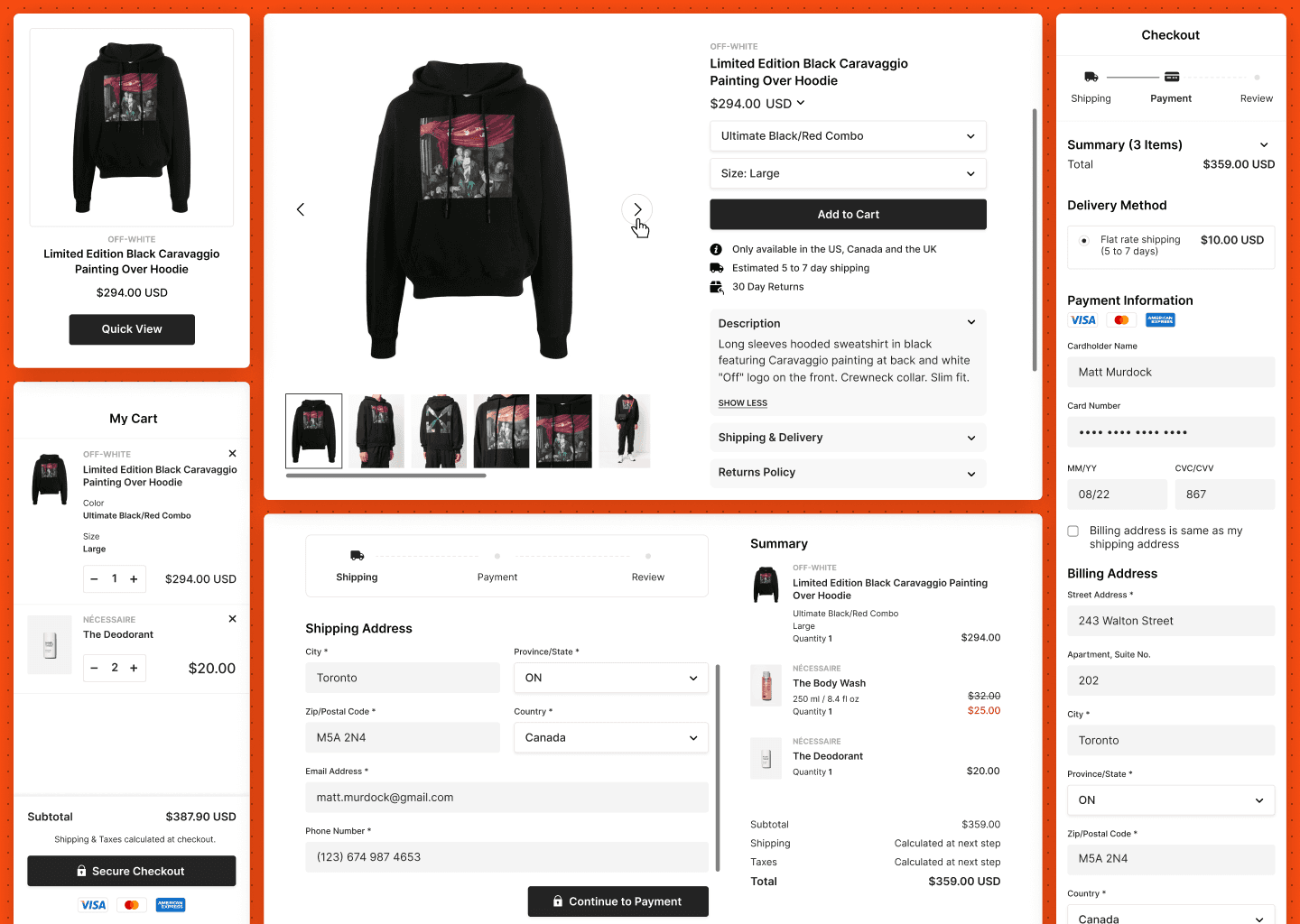
As the business pivoted to B2B, the challenge shifted to flexibility at scale. Publisher Storefronts needed to adapt to the visual identity of brands as different as BuzzFeed and Condé Nast while maintaining a consistent checkout experience underneath. That meant building a system with enough structural consistency to be reliable, but enough surface flexibility to feel native to each publisher.
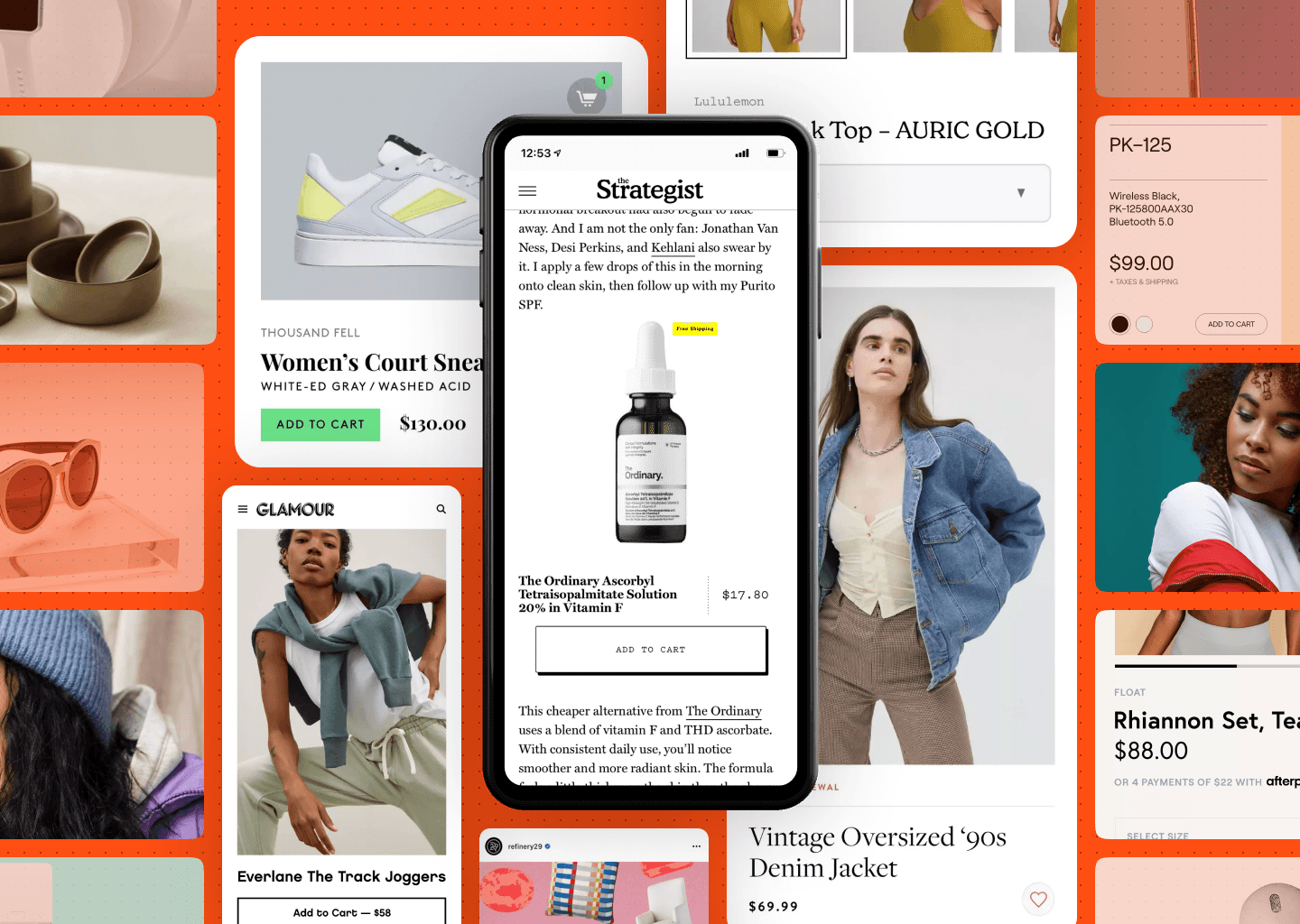
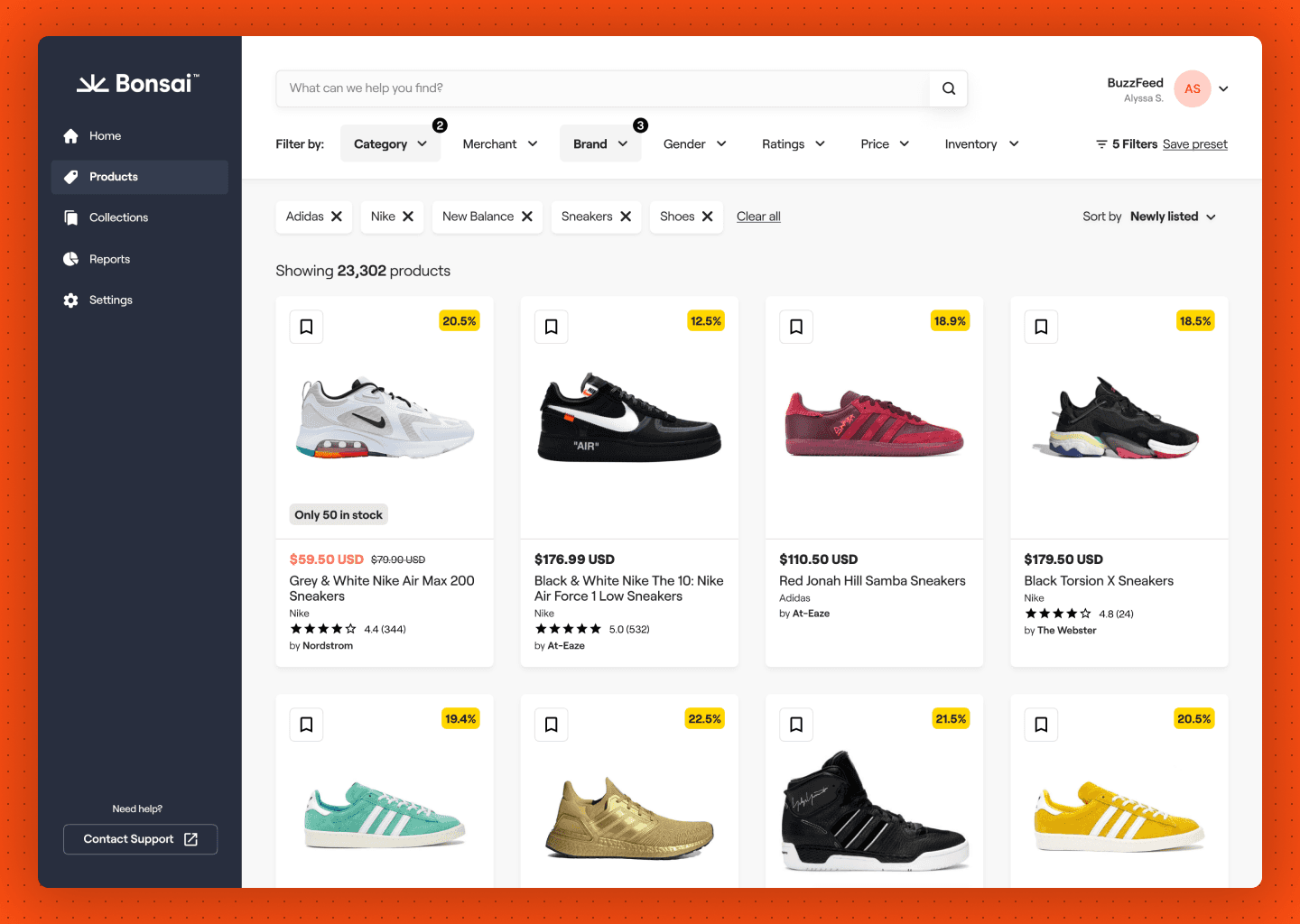
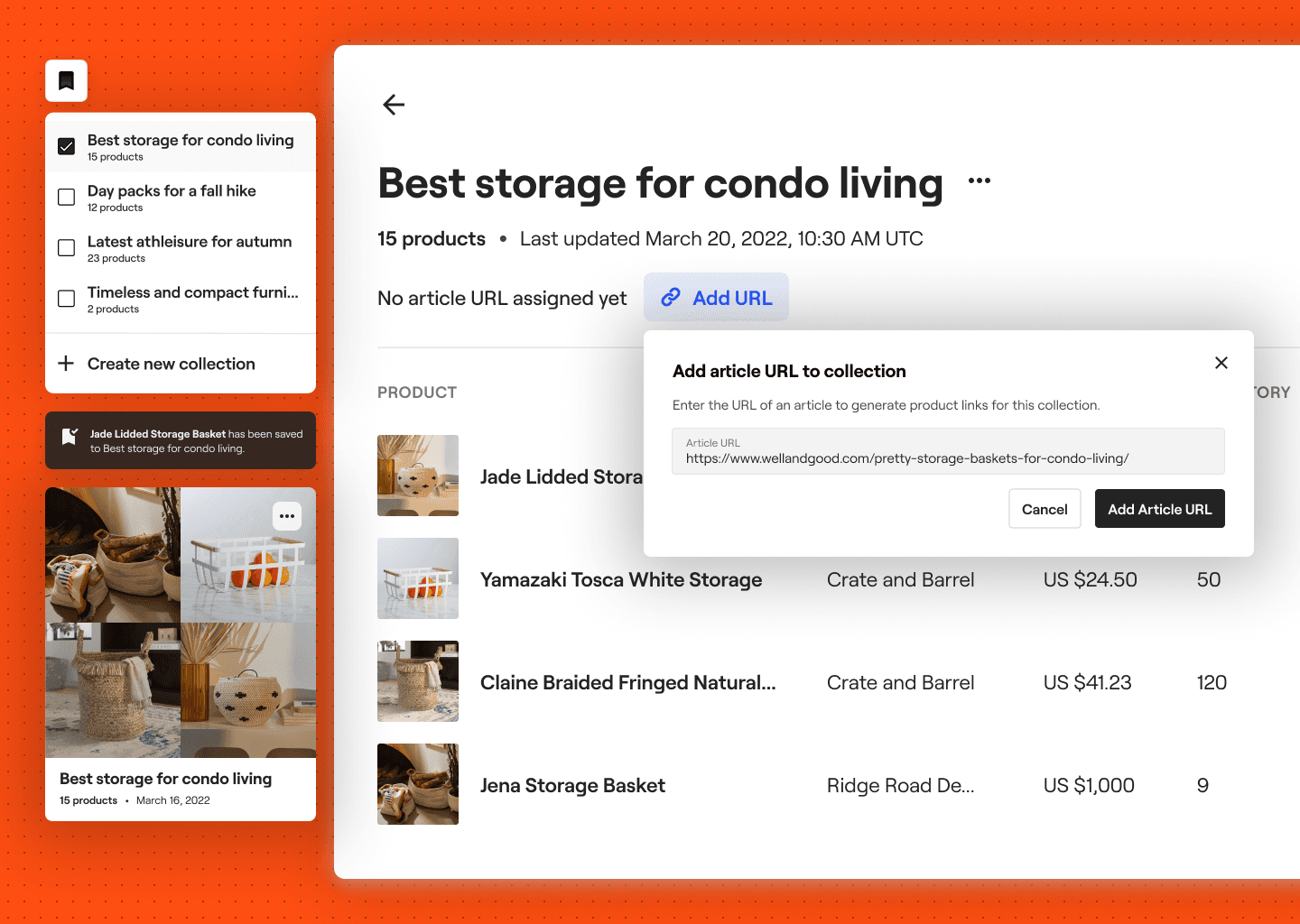
The Publisher Dashboard came last and required the most workflow thinking. Writers needed to find, evaluate, and embed products without leaving their editorial process, so I prioritized speed and context, designing around how a writer thinks about a product recommendation, not how a retailer presents one.
Outcome
Together the three surfaces formed the infrastructure that enabled publishers to turn editorial content into commerce experiences.
Shop Bonsai's embedded commerce approach significantly outperformed traditional affiliate links across every metric that mattered to publisher partners. These results were tracked in collaboration with the product growth and analytics teams, drawing on data from publisher partner reports as the platform scaled. In one partner implementation, the platform increased Earnings Per Click by 28%. Across integrations, embedded product experiences drove a 35% increase in click-through rates, a 31% increase in average order value, and a 53% increase in revenue per thousand impressions. In some publisher deployments, gross merchandise value grew by as much as 80%.
Major media brands including BuzzFeed, Complex, Vice, Condé Nast, Well+Good, and Gallery Media adopted the platform to power their commerce initiatives, validating the idea that commerce embedded naturally within content outperforms commerce that pulls readers away from it.
Back
Shop Bonsai
Bonsai was a Toronto-based commerce platform that connects editorial content with online shopping. Originally launched as a fashion discovery mobile app, it later evolved into a platform that enabled publishers to embed shoppable products directly within their articles.
Role
Product Designer
Industry
E-Commerce
PLATFORM
Web & Mobile
TIMELINE
2018—2022
Challenge
As Bonsai transitioned from a B2C mobile app to a B2B commerce platform, the product needed to support an entirely new workflow. Publishers and editorial teams required tools to quickly discover products, curate collections, and generate shoppable experiences inside articles, all without disrupting the reading experience.
The core design problem was scale and flexibility. The platform needed to enable writers to find and evaluate products quickly, support reusable commerce widgets within editorial content, and allow publishers to launch branded storefronts that felt native to their own visual identity. At the same time, the platform needed to respect each publisher's visual identity without disrupting the reading experience.
Process
I approached the project as an ecosystem design problem rather than a single interface.
The work began with research into how writers and editors actually source and integrate products into articles. Interviews with editorial teams revealed a fragmented, manual process where writers were independently searching for products, gathering images, and generating affiliate links before embedding them by hand. That research made it clear the real opportunity wasn't just building a better shopping experience for readers. It was eliminating the friction that prevented publishers from doing commerce at all.
This insight shaped the design direction for each surface. For the iOS Discovery app, the key question was how to make product exploration feel editorial rather than transactional. I designed around following brands and publishers rather than browsing categories, letting the platform surface recommendations through interest and context rather than search intent.
As the business pivoted to B2B, the challenge shifted to flexibility at scale. Publisher Storefronts needed to adapt to the visual identity of brands as different as BuzzFeed and Condé Nast while maintaining a consistent checkout experience underneath. That meant building a system with enough structural consistency to be reliable, but enough surface flexibility to feel native to each publisher.
The Publisher Dashboard came last and required the most workflow thinking. Writers needed to find, evaluate, and embed products without leaving their editorial process, so I prioritized speed and context, designing around how a writer thinks about a product recommendation, not how a retailer presents one.
Outcome
Together the three surfaces formed the infrastructure that enabled publishers to turn editorial content into commerce experiences.
Shop Bonsai's embedded commerce approach significantly outperformed traditional affiliate links across every metric that mattered to publisher partners. These results were tracked in collaboration with the product growth and analytics teams, drawing on data from publisher partner reports as the platform scaled. In one partner implementation, the platform increased Earnings Per Click by 28%. Across integrations, embedded product experiences drove a 35% increase in click-through rates, a 31% increase in average order value, and a 53% increase in revenue per thousand impressions. In some publisher deployments, gross merchandise value grew by as much as 80%.
Major media brands including BuzzFeed, Complex, Vice, Condé Nast, Well+Good, and Gallery Media adopted the platform to power their commerce initiatives, validating the idea that commerce embedded naturally within content outperforms commerce that pulls readers away from it.